Multiplicative magic cubes
- In this page:
- In another page:
What are multiplicative magic
cubes?
Multiplicative magic cubes are cubes which are magic using multiplication
instead of addition. The numbers used can't be consecutive, but they
must be distinct. A reminder of some definitions, similar to additive
cubes:
- a semi-magic cube has all rows, columns and pillars magic
- a magic cube has all rows, columns, pillars and triagonals
(=the 4 space diagonals) magic
- a perfect magic cube has all rows, columns, pillars,
triagonals and plane diagonals (=diagonals of squares parallel to faces)
magic
- a pandiagonal perfect magic cube has all rows, columns, pillars,
triagonals, plane diagonals, broken triagonals and broken diagonals magic
It seems that the first multiplicative magic cubes were published in 1913
by Harry A. Sayles in The Monist in 1913. This paper was republished
in the book Magic squares and cubes by W.S. Andrews, where we
can find (page 293) two cubes:
- a 3rd-order cube, with magic product = P = 27000, and with maximum number
used = Max nb = 900
- a 4th-order cube, P = 57153600, Max nb = 7560
In 2002, Marián Trenkler, Slovakia, published a paper on multiplicative
magic squares and cubes in Obzory Matematiky, Fyziky a Informatiky 1/2002
(31), pages 9-16, with:
- a 3rd-order cube, P = 27000, Max nb = 900 (same set of 27 numbers as Sayles's cube, but differently placed)
- a 4th-order cube, P = 57153600, Max nb = 7560 (same set of 64 numbers
as Sayles's cube, but differently placed)
- a 5th-order cube, P = 35286451200, Max nb = 2448
Is it possible to do better? Cube of the same orders, but using smaller products
P, or smaller Max nb? Yes, both for the orders 4 and 5!
After multiplicative magic squares,
here are the best known cubes, 3rd-order to 11th-order. The goal is always to minimize the magic product and the max nb.
Best known multiplicative magic cubes (best known = with smallest
known P and/or Max nb)
|
Order
|
Magic product P
|
Max nb
|
Multiplicative cube
|
Comments
|
|
3
|
(c) 6 720
|
160
|
semi-magic
|
|
|
(c) 15 120
|
105
|
|
|
(a) 27
000
|
900
|
magic
|
The best known magic cube (of any order) using the
smallest P
|
|
216 000
|
400
|
|
|
4
|
(b) 4 324 320
|
351
|
magic
|
The best known magic cubes (of any order) using the
smallest Max nb
|
|
5
|
(b) 13 967 553 600
|
855
|
magic
|
+ magic broken triagonals
|
|
(b) 101 625 502 003 200 000
|
2 976 750
|
perfect magic
|
The best known perfect magic cube (of any
order) using the
smallest P
|
|
(b) 104 064 514 051 276 800
000
|
250 880
|
|
|
6
|
115 651 343 808 000
|
3 300
|
semi-magic
|
|
|
223 592 598 028 800
|
2 262
|
|
|
(b) 117 327 450 240 000
|
5 225
|
magic
|
|
|
(b) 23 959 607 303 503 872 000
|
849 420
|
perfect magic
|
|
|
(b) 80 863 674 649 325 568 000
000
|
66 924
|
|
|
7
|
(b) 897 612 484 786 617 600
|
3 367
|
magic
|
+ magic broken triagonals
|
|
(b) 19 407 837 508 899 840 000
|
2 912
|
+ magic broken triagonals
|
|
1 411 407 979 783 492 239 360
000 000
|
1 259 712
|
perfect magic
|
|
|
5 750 476 043 814 094 602 240
000 000
|
862 400
|
|
|
8
|
(c) 13 248 760 275 450 475 776
000
|
4 797
|
magic
|
|
|
89 518 183 823 250 314 294 722
560 000
|
17 297 280
|
pandiag. perfect magic (*)
|
The best known pandiag. perfect magic cube
(of any order) using the
smallest P
|
|
9
|
(c) 321 308 934 200 224 938
519 552 000
|
7 191
|
magic
|
|
|
265 237 261 271 449 982 022
984 892 416 000
|
591 192
|
pandiag. perfect magic (*)
|
|
|
10
|
117 218 854 345 145 394 654
241 228 800 000
|
22 125
|
semi-magic
|
|
|
602 839 822 346 462 029 650
383 462 400 000
|
17 400
|
|
|
(c) 2 108 555 793 636 163 874
695 070 438 860 800 000
|
568 875
|
magic
|
|
|
(c) 23 827 892 281 763 155 326
511 017 263 976 960 000
|
511 270
|
|
|
(b) ~ 2.62 E+51
|
1 920 996 000
|
perfect magic
|
|
|
(b) ~ 3.52 E+59
|
9 018 009 000
|
pandiag. perfect magic (*)
|
|
|
11
|
(c) 386 505 025 119 121 838
921 061 678 274 867 200 000
|
20 801
|
magic
|
|
|
9 009 441 144 967 875 033 124
980 845 568 000 000
|
46 620
|
pandiag. perfect magic (*)
|
|
|
174 930 251 129 029 312 377
859 321 968 844 800 000
|
24 992
|
The best known perfect magic cube (of any
order), and
the best known pandiag. perfect magic cube (of
any order) using the
smallest Max nb
|
- Cubes of this table were first found
in 2006 by Christian Boyer, except (a) first found in 1913
by Harry Sayles, (b) in 2010-2012-2013 by Toshihiro Shirakawa,
(c) in 2017 by Elbert Krison
- (*) See the page on
pandiagonal perfect multiplicative magic cubes
- If
you succeed in getting smaller products (or smaller max numbers), send
me a message! Your
results will be added to this website.
- Download the best
multiplicative cubes,
orders 3 to 7 (Excel file
of 146Kb)
- Download the best
multiplicative cubes,
orders 8 to 11 (Excel file
of 276Kb)
3rd-order multiplicative magic cubes
It is easy to prove that any 3rd-order multiplicative magic cube must have
P = (center)^3. With two different possible constructions using the
integer 1
Two multiplicative magic cubes,
P =center3
= a3b3c3,
Max nb = a2b2c2
|
1
|
abc²
|
a²b²c
|
|
a
|
a²bc²
|
b²c
|
|
ab²c
|
a²
|
bc²
|
a²b²c
|
1
|
abc²
|
|
a²bc²
|
b²c
|
a
|
bc²
|
ab²c
|
a²
|
|
|
|
|
a²bc
|
b²
|
ac²
|
a²bc
|
b²
|
ac²
|
|
c²
|
abc
|
a²b²
|
c²
|
abc
|
a²b²
|
|
ab²
|
a²c²
|
bc
|
ab²
|
a²c²
|
bc
|
|
|
|
|
ab²c²
|
a²c
|
b
|
b²c²
|
ac
|
a²b
|
|
a²b
|
b²c²
|
ac
|
ab
|
a²b²c²
|
c
|
|
c
|
ab
|
a²b²c²
|
a²c
|
b
|
ab²c²
|
we can produce exactly 4 different 3rd-order multiplicative magic cubes
with the same P = (2·3·5)^3
= 27000: one cube from the first construction, and three from the second construction.
They use the same set of integers, but they are "different" because from
any of these 4 cubes, it is impossible to produce any other ones, using symmetries
and rotations.
The 4 different smallest 3rd-order multiplicative magic cubes,
P = 303
= 27000, Max nb = 302 =
900.
The left one is Sayles's cubes, the right one is Trenkler's
cube.
|
1
|
150
|
180
|
|
2
|
300
|
45
|
|
3
|
450
|
20
|
|
5
|
450
|
12
|
|
90
|
4
|
75
|
180
|
1
|
150
|
180
|
1
|
150
|
300
|
1
|
90
|
|
300
|
45
|
2
|
75
|
90
|
4
|
50
|
60
|
9
|
18
|
60
|
25
|
|
|
|
|
|
|
60
|
9
|
50
|
60
|
9
|
50
|
90
|
4
|
75
|
150
|
4
|
45
|
|
25
|
30
|
36
|
25
|
30
|
36
|
25
|
30
|
36
|
9
|
30
|
100
|
|
18
|
100
|
15
|
18
|
100
|
15
|
12
|
225
|
10
|
20
|
225
|
6
|
|
|
|
|
|
|
450
|
20
|
3
|
225
|
10
|
12
|
100
|
15
|
18
|
36
|
15
|
50
|
|
12
|
225
|
10
|
6
|
900
|
5
|
6
|
900
|
5
|
10
|
900
|
3
|
|
5
|
6
|
900
|
20
|
3
|
450
|
45
|
2
|
300
|
75
|
2
|
180
|
It is impossible to construct better 3rd-order cubes with a smaller P.
But, using Min nb > 1, it is possible to construct 3rd-order cubes
with a smaller Max nb (and bigger P), the smallest possible Max nb being 400.
Here are some examples with Max nb < 900:
On the left, P = 603
= 216000, Max nb = 400.
In the middle, P = 1203
= 1728000, Max nb = 480.
On the right, P = 1203
= 1728000, Max nb = 576.
|
90
|
80
|
30
|
|
320
|
150
|
36
|
|
200
|
192
|
45
|
|
240
|
9
|
100
|
180
|
32
|
300
|
288
|
25
|
240
|
|
10
|
300
|
72
|
30
|
360
|
160
|
30
|
360
|
160
|
|
|
|
|
|
48
|
225
|
20
|
60
|
288
|
100
|
96
|
225
|
80
|
|
25
|
60
|
144
|
200
|
120
|
72
|
100
|
120
|
144
|
|
180
|
16
|
75
|
144
|
50
|
240
|
180
|
64
|
150
|
|
|
|
|
|
50
|
12
|
360
|
90
|
40
|
480
|
90
|
40
|
480
|
|
36
|
400
|
15
|
48
|
450
|
80
|
60
|
576
|
50
|
|
120
|
45
|
40
|
400
|
96
|
45
|
320
|
75
|
72
|
And it is possible to construct
3rd-order semi-magic cubes using smaller constants. In the three examples below,
all the rows, columns and pillars have the same magic product P = 7560, but some
of their
4 triagonals do not have the same product: the example on the right is a very
nearly magic cube, only one triagonal is incorrect!!!
Three semi-magic cubes with the same P = 7560,
Max nbs = 135
(left), 180 (middle), 252 (right).
One,
two and three
correct triagonals.
|
1
|
56
|
135
|
|
1
|
42
|
180
|
|
1
|
30
|
252
|
|
72
|
15
|
7
|
54
|
20
|
7
|
90
|
28
|
3
|
|
105
|
9
|
8
|
140
|
9
|
6
|
84
|
9
|
10
|
|
|
|
|
|
84
|
45
|
2
|
84
|
45
|
2
|
60
|
63
|
2
|
|
5
|
14
|
108
|
5
|
14
|
108
|
7
|
6
|
180
|
|
18
|
12
|
35
|
18
|
12
|
35
|
18
|
20
|
21
|
|
|
|
|
|
90
|
3
|
28
|
90
|
4
|
21
|
126
|
4
|
15
|
|
21
|
36
|
10
|
28
|
27
|
10
|
12
|
45
|
14
|
|
4
|
70
|
27
|
3
|
70
|
36
|
5
|
42
|
36
|
In February 2013, André LFS Bacci, Brasilia, Brazil, constructed this
semi-magic cube with a smaller P:
P = 6720,
Max nb = 224,
One triagonal
|
21
|
20
|
16
|
|
32
|
42
|
5
|
|
10
|
8
|
84
|
|
|
|
2
|
56
|
60
|
|
15
|
4
|
112
|
|
224
|
30
|
1
|
|
|
|
160
|
6
|
7
|
|
14
|
40
|
12
|
|
3
|
28
|
80
|
In June 2017, I was surprised to receive still
better 3rd-order semi-magic cubes! From Elbert Krison, a 15-year-old schoolboy
of Jakarta, Indonesia. Elbert sent also new best known magic cubes of orders
8 to 11 listed in the table.
P = 6720, Max nb = 160 (left)
P = 15120, Max nb = 105 (right)
One
triagonal
|
3
|
28
|
80
|
|
8
|
105
|
18
|
|
160
|
6
|
7
|
21
|
48
|
15
|
|
14
|
40
|
12
|
90
|
3
|
56
|
|
|
|
|
16
|
5
|
84
|
30
|
6
|
84
|
|
21
|
32
|
10
|
12
|
35
|
36
|
|
20
|
42
|
8
|
42
|
72
|
5
|
|
|
|
|
140
|
48
|
1
|
63
|
24
|
10
|
|
2
|
35
|
96
|
60
|
9
|
28
|
|
24
|
4
|
70
|
4
|
70
|
54
|
And what about adding magic plane diagonals? Both for additive and multiplicative magic cubes, it is impossible to construct 3rd-order perfect magic
cubes.
4th-order multiplicative magic cubes
Sayles's cube and Trenkler's cube have the same characteristics:
P = 57153600, Max nb = 7560. Is it possible to construct 4th-order cubes with
smaller constants? Yes! My best cubes have a P more than 8 times smaller, and a Max nb more
than 20 times smaller:
4th-order multiplicative magic cubes, by Christian Boyer
P = 6,486,480
and Max nb = 546 (left cube, January 2006),
P = 17,297,280 and Max nb = 364
(right cube, June 2007)
(click
on the image to enlarge a cube)
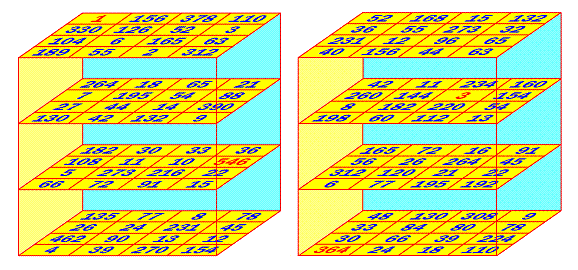
Some plane diagonals of my two cubes are magic, but not all of them: both
for additive and multiplicative magic cubes, it is impossible to construct 4th-order perfect magic
cubes.
These were my two best cubes, but not sure I found the best possible cubes. That's
why I asked these next questions. Who
will be able to construct better 4th-order cubes (with smaller P or smaller
Max nb)? Is it possible to construct
a multiplicative magic cube (of any order!) using integers < 364?
Of any order, because we can notice that the Max nb = 364 of the 4th-order cube on the right is smaller than the
Max nb = 400 used for the best possible 3rd-order cube.
In July 2008, Michael Quist
worked on this problem, and found that any 4th-order
cube must have Max nb ≥ 221 and that any 5th-order (or higher) cube must have
Max nb ≥ 442. If we suppose that his work is correct (read
it here), and if we suppose that any 3rd-order cube must have Max nb
≥ 400, then the enigma is limited to the 4th-order, and is equivalent to:
is it possible to construct a multiplicative magic cube, of 4th order, and
having 221 ≤ Max nb <
364?
In January 2010, Max Alekseyev, Dept
of Computer Science & Engineering, University of South Carolina, found another
4th-order magic cube having the same Max nb = 364 as my above cube,
but with a smaller P. None of its 24 small diagonals are magic (8 small
diagonals are magic in my cube), but this is not a problem because not needed
in a magic cube: only rows + columns + pillars + 4 triagonals have to be magic.
An excellent cube constructed by Max!
January 2010: Multiplicative magic cube by Max Alekseyev,
Max
nb = 364,
P = 8,648,640
|
1
|
110
|
224
|
351
|
|
130
|
8
|
297
|
28
|
|
308
|
27
|
13
|
80
|
|
216
|
364
|
10
|
11
|
|
|
|
231
|
12
|
78
|
40
|
|
96
|
273
|
5
|
66
|
|
6
|
55
|
168
|
156
|
|
65
|
48
|
132
|
21
|
|
|
|
144
|
91
|
15
|
44
|
|
77
|
18
|
52
|
120
|
|
195
|
32
|
198
|
7
|
|
4
|
165
|
56
|
234
|
|
|
|
260
|
72
|
33
|
14
|
|
9
|
220
|
112
|
39
|
|
24
|
182
|
20
|
99
|
|
154
|
3
|
117
|
160
|
 Toshiro Shirakawa in 2010 (Kuwana, Japan, 1983
- )
Toshiro Shirakawa in 2010 (Kuwana, Japan, 1983
- )
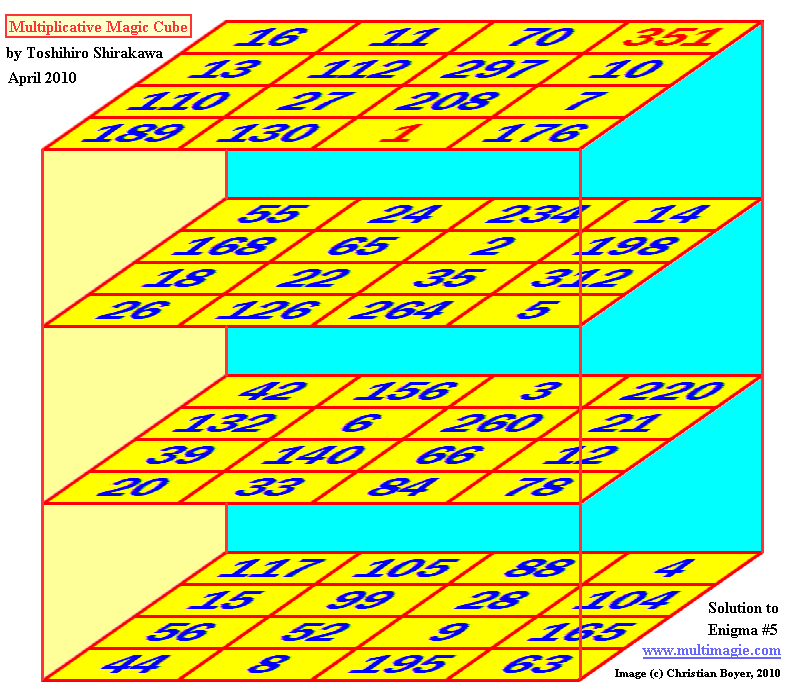
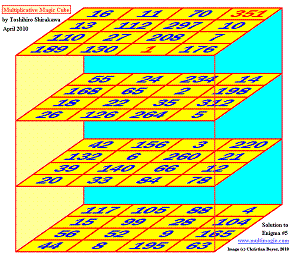
And finally in April 2010, Toshihiro Shirakawa solved my enigma #5 with this excellent cube using smaller
integers: Max nb = 351 < 364. The magic product is also smaller than the above
cubes. Congratulations!!! Toshihiro lives in Ebina Kanagawa, Japan. He is a programmer, and does mathematics as a hobby.
April 2010. Best known 4th-order multiplicative magic cube,
by Toshihiro Shirakawa
and best known cube -of any order- using the smallest possible integers
P = 4,324,320
and Max nb = 351
(click
on the image to enlarge it)
His method is easy and ingenious, without any computing. He
used, directly from this website, my own 4x4
multiplicative semi-magic square having the smallest possible product that
I constructed in 2005, with magic product 4320 = 25 * 33 * 5
and Max nb 27:
|
16
|
1
|
10
|
27
|
=
|
1A
|
1B
|
1C
|
1D
|
|
5
|
24
|
18
|
2
|
2A
|
2B
|
2C
|
2D
|
|
6
|
12
|
3
|
20
|
3A
|
3B
|
3C
|
3D
|
|
9
|
15
|
8
|
4
|
4A
|
4B
|
4C
|
4D
|
Noticing that this square used only factors 2, 3 and 5,
he cleverly reused it, combined with the four factors (E, F, G, H)
= (1, 11, 7, 13). That's why his magic product is 4320(from the square) *7*11*13(his
factors) = 4324320, and his Max nb is 27(from the square) * 13(his max
factor) = 351. And 351 is less than 364, as asked in the enigma. That's it!
Er... shame on me... to have been unable to think to this ingenious method...
using my own square...
|
1A
|
1B
|
1C
|
1D
|
*
|
E
|
F
|
G
|
H
|
|
1B
|
1A
|
1D
|
1C
|
H
|
G
|
F
|
E
|
|
1C
|
1D
|
1A
|
1B
|
F
|
E
|
H
|
G
|
|
1D
|
1C
|
1B
|
1A
|
G
|
H
|
E
|
F
|
|
|
|
|
2A
|
2B
|
2C
|
2D
|
F
|
E
|
H
|
G
|
|
2B
|
2A
|
2D
|
2C
|
G
|
H
|
E
|
F
|
|
2C
|
2D
|
2A
|
2B
|
E
|
F
|
G
|
H
|
|
2D
|
2C
|
2B
|
2A
|
H
|
G
|
F
|
E
|
|
|
|
|
3A
|
3B
|
3C
|
3D
|
G
|
H
|
E
|
F
|
|
3B
|
3A
|
3D
|
3C
|
F
|
E
|
H
|
G
|
|
3C
|
3D
|
3A
|
3B
|
H
|
G
|
F
|
E
|
|
3D
|
3C
|
3B
|
3A
|
E
|
F
|
G
|
H
|
|
|
|
|
4A
|
4B
|
4C
|
4D
|
H
|
G
|
F
|
E
|
|
4B
|
4A
|
4D
|
4C
|
E
|
F
|
G
|
H
|
|
4C
|
4D
|
4A
|
4B
|
G
|
H
|
E
|
F
|
|
4D
|
4C
|
4B
|
4A
|
F
|
E
|
H
|
G
|
I can now give the method used for my cube (P, MaxNb) = (17297280, 364)
which was challenged with enigma #5. This cube was constructed from
the Eulerian (or Graeco-Latin) cube below, using the best possible set (A, B,
C, D) (I, J, K, L) (a, b, c, d) generating 64 distinct integers and generating
the smallest MaxNb:
- (A, B, C, D) = (1, 2, 3, 4)
- (I, J, K, L) = (1, 5, 6, 7)
- (a, b, c, d) = (3, 8, 11, 13)
|
D
|
C
|
A
|
B
|
*
|
I
|
L
|
J
|
K
|
*
|
d
|
b
|
a
|
c
|
|
B
|
A
|
C
|
D
|
K
|
J
|
L
|
I
|
a
|
c
|
d
|
b
|
|
C
|
D
|
B
|
A
|
L
|
I
|
K
|
J
|
c
|
a
|
b
|
d
|
|
A
|
B
|
D
|
C
|
J
|
K
|
I
|
L
|
b
|
d
|
c
|
a
|
|
|
|
|
|
B
|
A
|
C
|
D
|
L
|
I
|
K
|
J
|
a
|
c
|
d
|
b
|
|
D
|
C
|
A
|
B
|
J
|
K
|
I
|
L
|
d
|
b
|
a
|
c
|
|
A
|
B
|
D
|
C
|
I
|
L
|
J
|
K
|
b
|
d
|
c
|
a
|
|
C
|
D
|
B
|
A
|
K
|
J
|
L
|
I
|
c
|
a
|
b
|
d
|
|
|
|
|
|
C
|
D
|
B
|
A
|
J
|
K
|
I
|
L
|
c
|
a
|
b
|
d
|
|
A
|
B
|
D
|
C
|
L
|
I
|
K
|
J
|
b
|
d
|
c
|
a
|
|
D
|
C
|
A
|
B
|
K
|
J
|
L
|
I
|
d
|
b
|
a
|
c
|
|
B
|
A
|
C
|
D
|
I
|
L
|
J
|
K
|
a
|
c
|
d
|
b
|
|
|
|
|
|
A
|
B
|
D
|
C
|
K
|
J
|
L
|
I
|
b
|
d
|
c
|
a
|
|
C
|
D
|
B
|
A
|
I
|
L
|
J
|
K
|
c
|
a
|
b
|
d
|
|
B
|
A
|
C
|
D
|
J
|
K
|
I
|
L
|
a
|
c
|
d
|
b
|
|
D
|
C
|
A
|
B
|
L
|
I
|
K
|
J
|
d
|
b
|
a
|
c
|
My other cube (P, MaxNb) = (6486480, 546) used a similar Eulerian cube,
but with the best possible set generating 64 distinct integers and generating
the smallest product: (1, 2, 3, 6), (1, 4, 5, 7), (1, 9, 11, 13).
5th-order multiplicative magic cubes
Trenkler's cube published in 2002 has
P = 35286451200, Max nb = 2448. Is it possible to construct 5th-order cubes with
smaller constants? Yes! My best cube has a P more than 2 times smaller, and a Max nb more
than 2 times smaller:
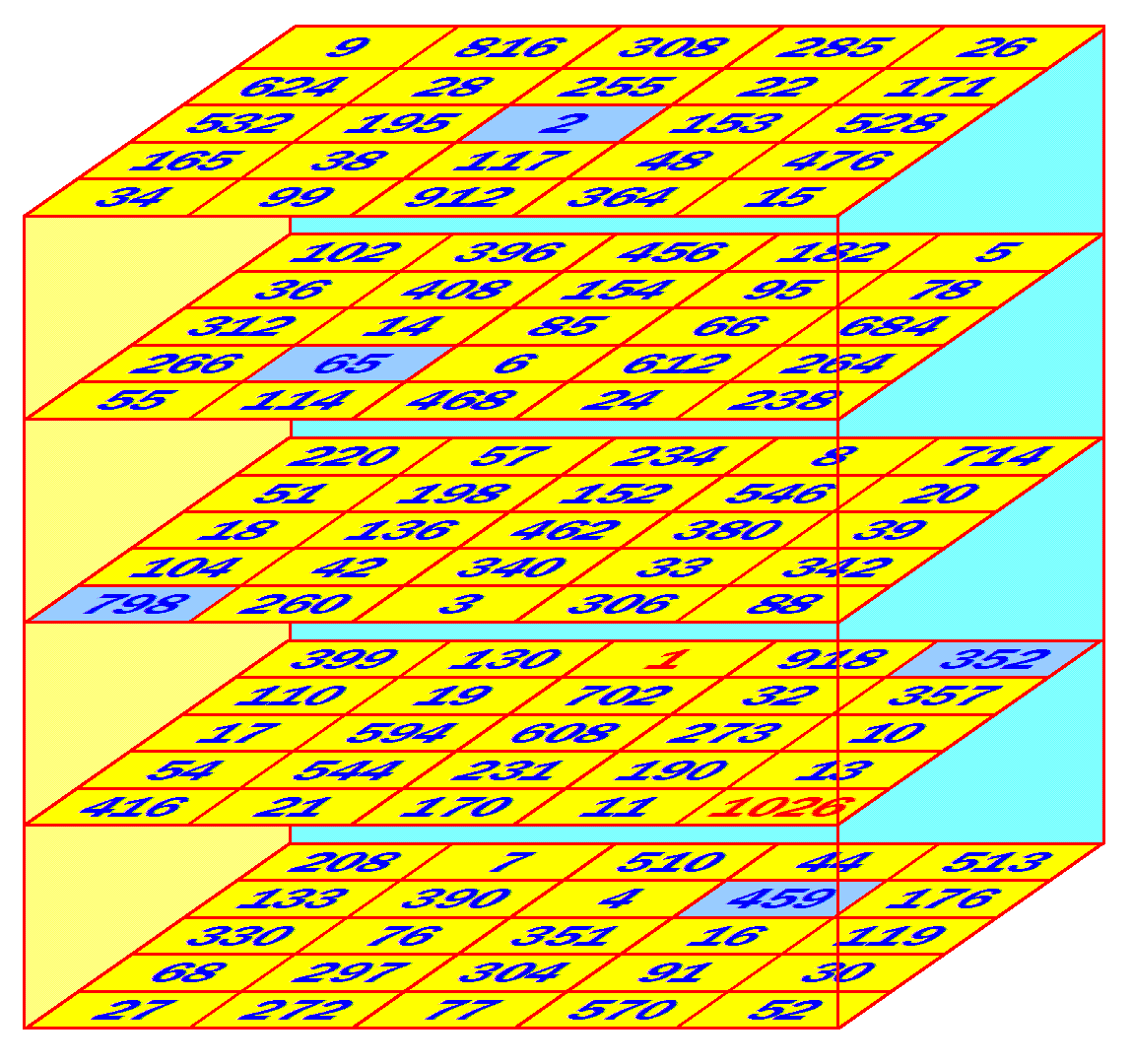
January 2006: 5th-order multiplicative magic cube, by Christian
Boyer
P = 16,761,064,320 and
Max nb = 1026
(click on the image to enlarge it)
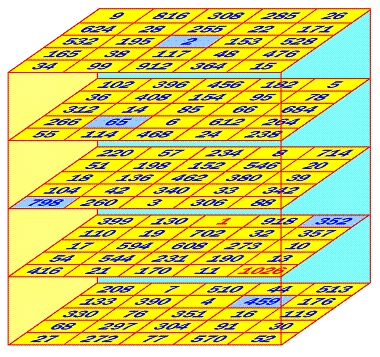
All its rows, columns, pillars and 4 triagonals are magic. And this cube has a very nice additional property: all its broken triagonals
are magic, as the example in blue.
In May 2010, Toshihiro Shirakawa constructed a 5th-order multiplicative
magic cube with smaller characteristics than my above cube: P = 13,967,553,600
and MaxNb = 855. Also with magic broken triagonals. This is today the best known
5th-order magic cube! You can see it in the downloadable Excel file, below the
table. Similarly to his 4th-order method, he used my 5th-order
multiplicative magic square (reproduced below), combined with (1, 11, 13,
17, 19). My above cube was an Eulerian cube (1, 2, 3, 4, 6) (1, 5, 7, 8, 9)
(1, 11, 13, 17, 19).
|
12
|
35
|
1
|
40
|
18
|
|
36
|
2
|
24
|
7
|
25
|
|
14
|
45
|
15
|
4
|
8
|
|
5
|
16
|
42
|
30
|
3
|
|
10
|
6
|
20
|
9
|
28
|
Unfortunately the plane diagonals of our two cubes are not magic: they
are not perfect
magic cubes. However, it is possible to construct 5th-order perfect magic cubes:
use the first known 5th-order (additive) perfect magic
cube constructed by Walter Trump and me in 2003, and replace each
number n by 2^(n-1). Then you will get a multiplicative perfect magic cube...
but tedious... using very big numbers: Max nb = 2^(125-1) = 2.13 ·
10^37, and P = 2^310 = 2.09 ·
10^93. In December 2012, Toshihiro Shirakawa constructed two far
better 5th-order perfect magic cubes: one with Max nb =
250 880, one with P = 2520^5 = 1.01 ·
10^17. Astonishingly, but with a larger order, perfect cubes using smaller integers are known: see my 11th-order
pandiagonal perfect cube with Max nb = 24 992 < 250 880.
6th-order multiplicative magic cubes
In January 2006, I constructed two cubes:
- P = 115 651 343 808 000, Max nb = 3 300
- P = 223 592 598 028 800, Max nb = 2 262
These cubes are only semi-magic: their 4 triagonals are not magic.
Later, in May 2006, I constructed a magic cube, this time with 4
magic triagonals. This added feature has a cost, bigger P and Max nb than the
previous semi-magic cubes:
- P = 170 400 029 184 000 000, Max nb = 554 400
Then in June 2010, Toshihiro Shirakawa constructed a magic cube with much smaller characteristics than my poor above
cube:
- P = 117 327 450 240 000, Max nb = 5 225
This is today the best known 6th-order magic cube!
It is possible to construct 6th-order perfect magic cubes: use the first
known 6th-order (additive) perfect magic cube
constructed by Walter Trump in 2003, and replace each number n by 2^(n-1). Then
you will get a multiplicative perfect magic cube... but tedious...
using very big numbers: Max nb = 2^(216-1) = 5.27 ·
10^64, and P = 2^645 = 1.46 ·
10^194. In December 2012 and February 2013, Toshihiro Shirakawa constructed
two far better 6th-order perfect magic cubes: one with Max
nb = 66 924, one with P = 2 882 880^3 = 2.39 ·
10^19. Astonishingly, but with a larger order, perfect cubes using smaller integers are known: see my 11th-order
pandiagonal perfect cube with Max nb = 24 992 < 66 924.
7th-order multiplicative magic cubes
In January 2006, my two best magic cubes were:
- P = 1 663 528 929 334 272 000, Max nb = 5 952
- P = 3 881 567 501 779 968 000, Max nb = 4 352
But in May 2010, Toshihiro Shirakawa constructed better cubes:
- P = 897 612 484 786 617 600, Max nb = 3 367
- P = 19 407 837 508 899 840 000, Max nb = 2 912
As the above 5th-order magic cubes, all their broken triagonals and
4 entire triagonals are magic,
but their plane diagonals are not magic: they are not perfect magic
cubes. With the same P and Max nbs, I have successfully constructed cubes with
all their magic plane diagonals... but unfortunately loosing 2 magic triagonals
on the 4 triagonals.
Keeping magic plane diagonals, I have constructed -still in January 2006-
two cubes with 3 magic
triagonals (now, only one triagonal is bad!) with the cost of using bigger characteristics:
- P = 16 579 776 648 314 880 000, Max nb = 24 000
- P = 101 059 382 457 057 024 000, Max nb = 9 486
and finally succeeded in constructing perfect magic cubes with 4 magic
triagonals, but with again bigger characteristics. To get the
4th triagonal is very expensive!
- P = 1 411 407 979 783 492 239 360
000 000, Max nb = 1 259 712
- P = 5 750 476 043 814 094 602 240
000 000, Max nb = 862 400
8th to 11th-order multiplicative
magic cubes
See the summary in the table at the beginning of this page. And
see the page on the pandiagonal perfect multiplicative
magic cubes.
To celebrate January 2006 when the cubes were created, the
two first numbers used in my 10th and 11th-order cubes are: "2006" and
"1"!
Return to the home page http://www.multimagie.com
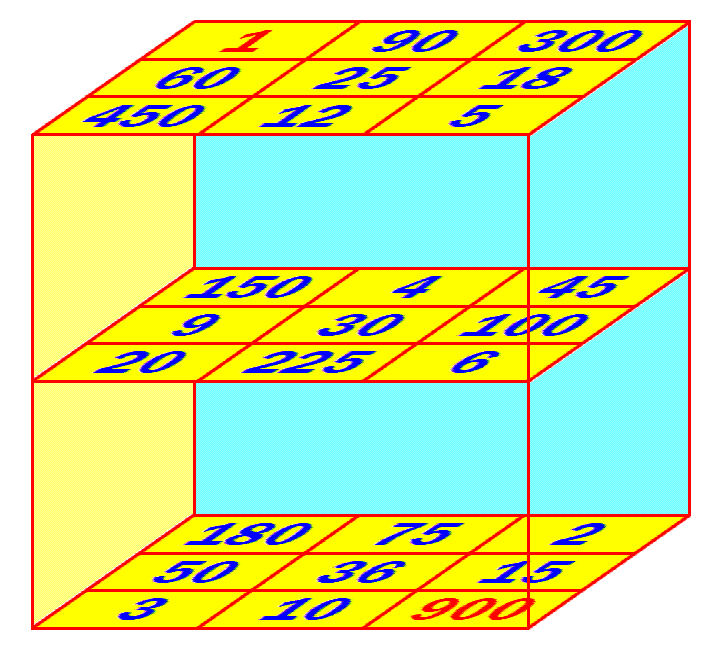 (click
on the image to enlarge the cube)
(click
on the image to enlarge the cube)